Sunday, June 24, 2007

Cascadia Wild, harvesting report-back on camass and coltsfoot

Since last fall I've been enjoying the classes, gatherings, and learning opportunities offered thanks to Cascadia Wild, a local non-profit whose mission is to "inspire personal connection to nature and community." Most of their activities center around peer-to-peer learning in a variety of formats. I've attended many of their Monday "community night" classes, where different people led discussions/classes on a variety of topics from bird language to plant tinctures to the primal mind. I learned a tiny bit of wilderness survival skills thanks to Aibric, who ran a few Saturday workshops leading up to an overnight wilderness survival trip to the woods, where we built debris shelters to sleep in through a drizzly night. It was incredibly empowering to realize that I could land in the middle of the woods with nothing and be able to make a shelter for myself to stay warm and dry, and I'm now experimenting with a debris shelter in our backyard to learn more about how it holds up in different seasons and what sort of ongoing maintenance is required.

One of my favorite Cascadia Wild associated activities has been the Ethnobotany Club. I joined them last fall for an outing to gather acorns and process them into flour, which was a lot of fun and included plenty of enjoyable diversions besides figuring out the acorn process! This year we've been meeting twice a month, once on a Monday afternoon to go somewhere local for scouting/learning/light harvesting, then once a month on a Saturday for an all-day trip to somewhere more remote where we can do more intensive harvesting. It's been a wonderful experience because it's a bunch of plant geeks with lots of knowledge and lots of books, with everyone sharing what they know, so I've learned a lot fast! I've sampled many new plants and been able to jump-start my plant identifying skills.

Harvest Results

Because I've found very little information, I want to share two report-backs on harvested roots I've tried on our outings: Camassia quamash, the common blue camass, and Petasites frigidus, the native coltsfoot.

Camassia quamash, Common camass


Our group found a dense camass patch in eastern Washington. My guess is that it was pretty heavily overgrown, as there were many camass plants smooshed together, and most of the bulbs we harvested were small, only 1/3 or 1/2 the 1" to 1.25" diameter size the bulbs reach at maturity. Probably after a couple of years of thinning via harvesting the patch will produce larger bulbs. Theressa and I harvested 1.25 pounds of bulbs, which was a relaxing task. I haven't made a digging stick for myself yet, and we didn't bring a spade or anything, so I just improvised with sticks to help loosen the soil and pop the bulbs out. The patch seemed to be in the middle of a very recently dried-up pond; the soil wasn't really wet or moist, but it hadn't dried to the hard surface of the other soil nearby, so getting the bulbs out was fairly easy.

The best information I've found on camass comes from Jon Kallas and can be found in back issues of his Wild Food Adventurer newsletter. Kallas describes the crucial skill of distinguising edible camass from death camass. For plants which weren't still exhibiting the giveaway blue flower, I carefully checked the leaves to be sure I was picking the right plant. I don't think we saw any death camass in the patch from which we harvested, though there were definitely death camass plants nearby. The other crucial task Kallas details is how to prepare the bulbs. Eaten raw they have a very starchy, mouth-clogging feel to them and aren't very palatable. Natives built large steam pits to cook 100+ bulbs, making a fire and then burying the pits to steam-cook for 1-2 days. In these modern times, when us white honkies can only come up with 1.25 pounds of roots at a time, a 2-day steam pit would be a bit silly. Kallas determined that pressure-cooking the roots for 9 hours gives close to optimal conversion of the indigestible starch inulin into digestible (and tasty!) sugars.

The other task we needed to do before cooking was to peel off the outer layer of dirty skin from each bulb. That seemed tedious, so the bulbs sat in a plastic bulb at room temperature for about three weeks before we got around to processing them. They didn't seem to deteriorate at all, presumably since they were essentially into their dormant period anyway. Removing the skins took a while, but got faster as I gained practice at kind of pinching and twisting to usually get the skin off in one movement. When it didn't work out it could take a little while to pick it all off. :/

When I had all the bulbs cleaned, we cooked them! I didn't know how much water the pressure cooker would steam off over 9 hours, so I filled it about one quarter full, covering maybe half the bulbs in water. I began cooking it in the evening, planning to let it cook overnight, but the swish-swish-swish-swish of the pressure cooker valve rocking back and forth quickly brought Theressa's head poking out of her bedroom asking if that racket was really going to continue overnight. So off went the heat, to be resumed the next morning. About eight hours after we began heating again the next morning, Theressa noticed it was smelling a bit scorched and turned off the heat. We'd run out of water in the pressure cooker. We decided to call that enough cooking and tried them out as soon as the pressure cooker cooled down.

I loved them! They were very sweet and I mostly just ate them like candy. Theressa wasn't quite as thrilled with them straight-up, though she thought she'd enjoy them quite well as proper dishes mixed with other foods. There was a slight butterscotch taste, but I'm not sure whether those were actually camass flavor or a result of having scorched slightly.

Petasites frigidus, Coltsfoot

I don't have much to report here, but since there's so little information I thought I'd pass along the little bit I discovered. We identified this species in wet soil along a river, so I pulled up four plants with rhizomes to try out. The roots were thin, not very substantial--a few inches long per rhizome and maybe 3-4 times the thickness of spaghetti. A few sources say that the roots were cooked by natives, but not many sources list this use and there isn't any detail as to how tasty they are. (One of the main citations was of roots being roasted by the Inuit, whom I believe were rather hard-up for any vegetables to eat and probably weren't too picky.)

It took about four days before I had a chance to roast the roots, and they'd dried out a bit and looked less palatable by the time I added it to a chicken dish going into the oven. We bake our chickens at 480 degrees in a Romertopf stoneware pot, cooking one hour with the top on, then 15 minutes with the top off. I tried one of the roots after the first hour, and it seemed cooked through and tender enough to eat. It wasn't bad, but it didn't make me want to gobble them down. I'm not very experienced at describing food tastes, so the only thing I can say is that it left me with an odd, slightly unpleasant aftertaste of...something like...fishiness?

Unfortunately, being the ignorant cook that I am, I didn't realize that the next 15 minutes of cooking with the pot top off greatly increased the heat blast on everything in the pot. 15 minutes later the chicken was nicely cooked, but the roots had been crisped to charred uselessness. :( (We've cooked lots of beets, potatoes, rutabagas, turnips, etc with chickens in the past and didn't have this problem; I assume the problem this time was the fact that the roots were skinny instead of large fleshy chunks, and/or the fact that we only had half a dozen roots cooking instead of the normal chock-full pot, where maybe a larger mass of roots would have distributed heat better.

I'd like to try the roots again, being more careful to pull them out before they overcook and getting some different people to try them and see what they think. I'd also like to harvest the roots in fall or early spring; I harvested them at the worst time for roots since most of the energy has already gone up into the leaves. That might result in larger roots, and maybe the flavor would be better.

Sunday, February 18, 2007

Driveway-be-gone!

I am happy to announce that our driveway has disappeared. It did not, as my sister guessed, elope with the neighbor's patio. Rather it was murdered, most deliberately and cruelly. Damn but am I proud!

Background

Until three weeks ago, we had a double-wide landing strip of a driveway, 15' wide (plus another 8" worth of railroad ties) and 80' long, stretching from the street all the way to the carport. With another chunk of asphalt up against the street and a walkway leading to and along the front porch, we had about 1400 square feet of impermeable surface, happily leaching toxins from the crude sludge petroleum of which asphalt is composed. From the day we moved in last year, we knew that there was way more driveway than we needed, and that it was only a matter of time until we narrowed it down to whatever footprint we actually need. That, however, didn't stop us from filling it up with anything and everything--wood to be split, potentially useful scrap lumber, painted and pressure treated wood to be recycled, metal posts, potted plants, wood chips, river rock from the yard, etc etc...cleaning the crap out of the driveway was a project in and of itself!

As part of the overall yard design I put together last fall, we decided to remove everything except the strip along the porch, which is in year-ronud full shade anyway, and the few feet extra extending from that strip to the driveway. We considered retaining a 4' asphalt path from the street to the house, carving it out from the rest of the driveway to be removed. But we decided against that, since it would still be leaching toxins into the surrounding soil. It would also have made the project more difficult, as the designated path curves around trees, so carving the path out of the asphalt to remove would have required much more precision and care than a wholesale removal.

I didn't know the first thing about do-it-yourself asphalt removal, and was frustrated not to find any detailed information online. There's some general info in Richard Register's Depaving the World, but other than that the only reference I found was to going "low tech and high sweat, using heavy-duty hand tools." None of this was detailed enough to walk me through what we needed to know. :/ Another challenge was that I didn't even know how thick the asphalt was, what sort of gravel layer was underneath, etc. Our jack-of-all-trades genius neighbor Terry thought it was 6" deep, based on the amount of material he saw brought in a few years back when the driveway was laid down, but he wasn't sure. I dug out the soil in two spots at the edge of the driveway to see what the asphalt layer looked like from the side, and made one exploratory hole about 5 feet into the driveway, using a hammer, shovel, and pickaxe. It looked to me like the asphalt was barely even 2" thick, but I wasn't sure whether the edges of the driveway would be indicative of the depth throughout, whether different places even in the interior of the driveway might be different depths, etc.

Research

I started by finding out what the disposal costs would be. The closest place, about two miles away, costs $25 per pick-up load or $30 for a dump truck load up to 12 cubic yards. I estimated that if we borrowed a pick-up, it'd cost at least $400 just for dumping fees, plus gas and wear and tear. Renting a u-haul would probably be a bit cheaper but would put extra pressure on us to get the job done fast. Next, I called around to get a few quotes on what it would cost to have someone come in and do the entire job for us. I was calling in late summer, and all but one contractor said they were overloaded with work and couldn't give me a bit at the time, or said they'd call back and never did. The one fellow who gave an estimate over the phone said it'd be about $1200-$1400.

Theressa got prices from rental equipment places for demolition hammers (jack hammers) and walk-behind cutting saws. The demo hammers cost about $60 per day or $150-$200 a week and came in weights from 60 to 85 pounds for electric hammers. (Compressed-air hammers exist and give the option of heavier hammers for faster cutting, but we didn't get prices since we didn't want to mess with the noise, hassle, and extra rental cost of a compressor.) Walk-behind saws cost about $100 per day, plus an expected $10-$20 for wear and tear on the saw blade, depending on how thick the driveway was. (With Terry's help we ruled out the saws, since he thought if the driveway were only 2" deep the saw wouldn't work well, and if the driveway were of uneven depth the blade height would require careful adjustment to avoid punching through the asphalt and losing the "channel" of water required for the blade to operate properly.) I also called a sawcutter outfit, to find out what it would cost to have them cut the driveway into approximately 3' x 3' chunks for us, which would be about 650 linear feet of cutting. They quoted over the phone a $1000 cost if the driveway were 6" deep, or $672 if 4" deep. Definitely way more than doing it ourselves, even if it took a full week.

Theressa had the bright idea of asking for advice from a fellow neighborhood association board member who runs the asphalt recycling place nearby. He clued us in to the disposal option of having a 10 cubic yard dumpster dropped off on a Friday for us to fill up (asphalt only--no loose gravel or soil) and have hauled away again for $150 total. Bingo!

The Plan

So we had our plan: rent a demolition hammer with a 6" spade bit (essentially a 6" wide, thin chisel) to cut up the driveway in advance into 3' x 3' squares, small enough to be manageable by two people. We'd line up a 10 cubic yard dumpster over a weekend and fill it up. (At 2" thick, the 1200 square feet of asphalt should take up a bit less than 8 cubic yards.) Then a big work party to load the asphalt into the dumpster, and off it goes! It'd be pretty spiffy if we could coordinate things tightly enough to have a load of chips arrive just after the asphalt were cleared off, to have the work party spread the chips out, but we figured that'd be too hard to pull off, so the chip spreading would just have to be up to me in the days after the work party. We had seven trees in the design for planting once the driveway was cleared out. I was tempted to just plant them all as soon as possible, but decided to minimize chip-spreading work by allowing the chip truck to dump a load at the end of the former driveway closest to the house, spreading those chips in the immediate vicinity and planting the appropriate tree(s) in the area just covered, waiting for the next load of chips to be dumped up to the limits of the former pile's spread, distribute the new chips and plant the new tree(s), repeat etc repeat. Much less work than planting all the trees and having to wheelbarrow chips from the street up to the house.

We expected two major problems with the soil reclaimed from beneath the asphalt: serious compaction and potential contamination from the asphalt. For these reasons we decided the only plants we'd plant now would be the trees, from which we wouldn't eat for two years anyway. In the meantime we'll let the woodchips, worms, and soil life do some loosening up of the soil. We'll also try to establish some tap-rooted plants like chicory and daikon radish to bust up the compacted soil and send organic matter deep down. We'll also try to inoculate the woodchips with oyster mushrooms to help out with breaking down any hydrocarbons still present from the asphalt. After two years of such remediation, we'll feel comfortable eating non-toxin-concentrating plant parts from this soil (avoiding things like the leaves of mustard greens, which are said to concentrate lead from soil and may pick up other heavy metals too?). The understory guilds for a few of the trees include berries like blueberries (half-high and lowbush), lingonberries, and kinnick-kinnick. Depending on how difficult it is to dig in the soil, we'll plant them out either this fall or fall '08.

Execution

I rented a 65 pound electric demolition hammer and found that it cut through the asphalt with no trouble at all. Between myself and Terry, who came over to help out since he misses his old days of construction work, it took 5 or 6 hours max to do the whole driveway! I started by running the hammer a few seconds in one spot, lifting it and sliding it 5" along the line, running a few seconds, repeat ad nauseum. This was very effective. I also tried running the hammer continuously, nudging it along the line as it jumped around. It took me a little while to get the hang of this method, but it's what Terry used when he came over, so I stuck with it and found it to be a bit faster than going bit by bit. Much harder to control the cuts, though, so if you need a straight clean line the bit by bit method is the way to go. The hammer wasn't that heavy, and I didn't even feel sore afterwards. A 70 pound hammer might have been the ideal weight, making the job that much faster and easier without being much of a strain. More than 70 pounds might have gotten into the realm of hard work just moving the hammer around. Ear protection was important, but eye protection turned out to be unnecessary--no flying chunks of asphalt or anything.

A few days later the dumpster arrived and we were ready for the Saturday work party! We set up a few 2" x 6" boards as ramps to get wheelbarrows up into the dumpster. Theressa did a great job of sending out work party invites and rounding up wheelbarrows, sledgehammers, and flat shovels. The day of the work party we had 12-15 people throughout the day, some staying all day, others for a few hours in the morning or afternoon. People organized into teams to break up the asphalt squares into smaller pieces, load them into wheelbarrows, and unload them into the dumpster. My preferred method was to lift up a square on edge by myself or with another person, then hurl it back to the ground. Ideally it would break into two to four pieces, though often it would break into more than that, or require another lift and hurl. Other people propped squares up on rubble and whacked them with sledgehammers to break them up. Clean-up crews followed the main square action, scooping up crumbly asphalt bits into recycling bins to be wheelbarrowed and dumped like the larger chunks.

After just an hour or an hour and a half, we were already about halfway done! The only problem was that we had filled about 2/3 of the dumpster. Apparently there was a lot more dead space created in the dumpster as the asphalt was loaded in than I had expected. Luckily, the dumpster company was able to come out with an hour's notice to pick up the full dumpster and drop off an empty one. So by the time lunch rolled around, we'd filled the first dumpster to the top; while we ate the dumpsters were swapped out and we were able to resume work without a hitch. We filled the second dumpster about half to 2/3 full, so it seems like a good rule of thumb is to double the actual amount of asphalt to figure how much dumpster space it'll take up.

As the main asphalt moving work wound down, people raked and shoveled the remaining gravel into piles dotted across the driveway. It's a good thing we didn't have wood chips delivered, since although there wasn't a whole lot of loose gravel, we definitely weren't ready for spreading anything else out yet! The other final driveway task was to dig out the railroad ties, for which, conveniently, one of our helpers had a good use...so he drove them all away without our having to bother with craigslist, etc.

All in all, the work party was a wild success for getting rid of the driveway. After the driveway project was pretty much done, we set those folks who still had energy left over to hacking back the laurel hedge between the former driveway and the next door neighbor, to open up planting spots and light for a new hedgerow of evergreen edibles. My main lesson from the work party is the importance of advance organization of all the tasks we wanted to get done. We did a great job of figuring out as many of the driveway details as we could, but didn't do as good a job of arranging for pruning tools for the hedge, and didn't discuss in advance how we'd coordinate the two projects. There could have been teams of people working on the hedge while the driveway was still being moved out, preventing the bottleneck in tools we suffered by waiting until the driveway was done. There were also other small projects we'd thought of to which we could assign people, but we weren't organized enough to actually set anyone up with those projects. Directing people, answering questions, and making decisions to deal with unexpected situations takes a lot of your energy and focus!

The Aftermath

The piles of gravel went away via craigslist and the next door neighbor the next day. The revealed soil is almost as badly compacted as I'd feared, requiring a pickaxe to get through the first 4-8" (which seems to be some sort of fill layer of gravel & sand) before finding real soil. I've planted out the seven planned trees, making generous holes and trying to make sure the trees have enough room to expand their roots for at least the first year before hitting compaction. I've also hacked away randomly at different spots in the driveway to make a few starts of holes...hopefully that'll encourage water percolation, root penetration from the taprooted cover crops, and worm wriggling at least in those spots. A more focused application of the pickaxe has helped open up the soil right next to the street, where a natural trough creates a swale. When it was asphalted, we had standing water in heavy rains. After some hacking, the rain seems to be percolating, slowly but surely. Unfortunately, so long as cars are still operating, that area won't be fit for growing, as it's a natural gathering place for oil and other street-surface contaminants. :\ But we have successfully reclaimed a solid 1200 square feet of growing space...go us, and thanks to all those who helped!

Friday, February 02, 2007

Stuff Purge (or: "Stuff Sucks")

Warning: I don't expect this to be a terribly exciting post, so here's the Reader's Digest version: Theressa and I are getting rid of a lot of stuff, and we think it's pretty neat. Because stuff sucks.

To expand a bit...although I went through a big "stuff purge" before moving from Cincinnati to Portland (to the point where I was able to fit nearly all my worldly possessions into my Toyota Camry), that still left me with a lot more stuff than I really need. Over the last year I've been going through another ongoing round of intense sloughing. I sold off or gave away my stamp collection (damn near worthless) and baseball card collection from when I was 10 years old, my legos, my Teenage Mutant Ninja Turtles comic collection, about half my non-Zelazny science fiction/fantasy books and 25% of my music CDs (both already cut way down in Cincinnati), all my computer games (even Civilization, my multi-year addiction!), lots more clothes (I still have boxes of clothes, more than I really need--but mostly things Goodwill wouldn't even want since they're permanently stained with dirt or blood or already in tatters), and most amazing of all--a significant chunk of my Zelazny collection.

It's been really neat turning all these dust collectors into valuable books on edible plants and such! And most of the stuff has been really easy to part with emotionally--I find that I'm not really tied to it. It's mostly a relief to not have to deal with it ever again. The one category of exception is the Zelazny books--it was really neat having all kinds of foreign editions of his books with their pretty covers all lined up my shelf. But not quite neat enough any longer to overcome the not-neatness of taking up shelf space which could be holding resources about plants, tracking, wilderness survival, etc. And the non-essential Zelazny books aren't neat enough to be worth boxing up and storing when we start doing house renovations, or neat enough to be boxed up and carried to a new location if/when we move. So off they go, to new appreciative homes!

There's still room for more purging, espcially in the Zelazny and music realms...so I'll probably do another round in the future. But at this point I'm still attached enough to some of the items, despite knowing that I don't really need them, that they'll sit on the shelf a bit longer. And, ironically, one of the main items I moved to Portland to discard is still taking up a sizable chunk of space--my car. Although I don't drive it, Theressa still does, so it's still around. At least it doesn't weigh on me psychically or monetarily--I don't put a penny into it, and whenever Theressa comes home and says something like "the radiator is leaking, and if I don't keep putting water into it every 30 minutes worth of driving, the engine will explode and wreck the car", my response is "Cool! Maybe it'll blow up and we can beat the crap out of the remains with a sledge-hammer!" So I'm not too worried about the car still being around, but I do expect that we'll wean Theressa off entirely (she only drives it once a week at this point) in the near future and be rid of the car for good.

My goal is to get myself to the point where, mentally, I can leave all my stuff behind. That doesn't mean I'm trying to physically get rid of everything; I just want to have a relationship with my stuff such that I can dump it in a second if the life of a hunter & gatherer becomes the most appropriate for the situation. I'm sure that for a while I'll be tied to some of my stuff, if for no reason other than my complete dependency on books and the internet for knowledge of plants and other survival skills. But as I internalize more of that knowledge the books will become less crucial.

Theressa's been doing much the same as I, doubled (in proportion to her greater amount of stuff!) Lots of craigslisting, ebaying, consignment shop'ing, and donating to the local anarchist collective. We'll wrap up with a quote from the lady herself: "Shit bogs me down and sometimes I think I should just get a dumpster and leave one pair of underwear, one pair of pants, one shirt...shit's fucking stressful! [Note: she does not mean our humanure compost system, which she says is easy.] Figuring out what to do with it and how to take care of it. I wasn't a big stuff connoisseur before, never got too deep into consumer madness, but now I've backed off even further and I can pretty much say that 'stuff sucks'."

Wednesday, December 20, 2006

Book review: Mycelium Running by Paul Stamets plus our fungal plans

Review


I've finally read Paul Stamets' Mycelium Running: How Mushrooms Can Help Save the World, which has been on my list for some time. It's an excellent assembly of the ways in which mushrooms can be used for real-world applications, from growing in your yard for edible and medicinal use to filtering contaminated water to speeding the regeneration of clear-cut landscapes. A while back I started reading Stamets' The Mushroom Cultivator, mistakenly believing I needed to read his books in order. I was turned off by the book, finding its detailed descriptions of how to set up a sterilized mushroom lab boring and impractical for a world of energy descent. My friends Torey and Briannah recently assured me that The Mushroom Cultivator and Growing Gourmet and Medicinal Mushrooms are not prerequisites for Mycelium Running, acting rather as companion volumes with details on laboratory-based cultivation.

Much of the information in Mycelium Running I had already picked up from friends, glancing through the book in the past, reviewing other Stamets and Fungi Perfecti writings, hanging out with permaculture people, etc. But it was good to read through it all at once and get an organized presentation of some of the possibilities. It's clear that the functions and human uses of mushrooms are only barely understood so there's plenty of learning still to be done.

I found it interesting comparing Stamets' world-view with some of my realizations and insights from other authors. Even though the book was published in 2005, Stamets doesn't seem to have been aware of Peak Oil while writing, or at least doesn't give any indication that he expects civilization to deviate from its course of ever-onward progress. He does express concern about various environmental issues, but doesn't say a thing about changing the behavior that causes the problems, either at an immediate direct-cause level or at a root-cause level. He simply presents ways that mushrooms can remediate some of the damage, allowing us to continue on our path. Several of these remediation techniques still rely on high-complexity organization for deployment. In general, Stamets' philosophy strikes me as a variation on "technology will save us", except that Stamets believes it's mushrooms that will save us (and as much as says so in the book's subtitle). There's also an echoed theme of faith in science as the path towards betterment of humankind.

Despite those big-picture blindspots, Stamets is one of the foremost mycologists in the world, doing cutting-edge research and dissemination of this sort of information, putting it into the hands of lay-people who can run with it. The book is an invaluable resource and I will definitely be buying a copy for my library.

Our Fungal Plans


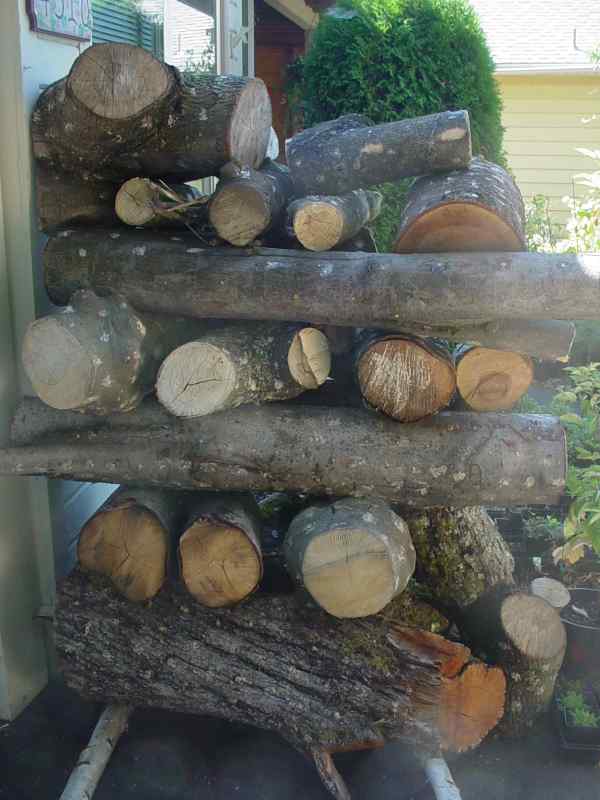
Last September, in The Birds and the Bees, I mentioned the logs we inoculated with shitake and oyster mushrooms. We have since moved the logs away from the house, where our friends warned us they might attack the wood. The shitakes are now piled in the back yard, and we spread the oyster mushroom logs (several of which are already fruiting a tiny bit) through the front yard, half-burying them in the wood chips. Since oysters are very aggressive mushrooms, we're assuming that they'll continue to dominate the logs without concern of other fungi invading from the ground (which is why you usually elevate your mushroom logs on a pallet). In fact, the oysters may well start to colonize the surrounding wood chips.

I have a few other plans for fungal experimentation:


  • Grow oyster mushrooms in buckets of coffee grounds, which we get for free from two local coffee places. We should be able to use our fruiting oyster mushrooms as inoculant for the grounds
  • When we come across more fresh-cut wood, add some into the pile of shitake logs to be colonized by the existing logs. Maybe put some adjacent to the oyster mushroom logs in the front yard, too. As the shitake logs fruit, we'll at least shake spores onto the new logs, and maybe do a more deliberate spore-slurry creation and inoculate the new logs.
  • We're taking out all the asphalt in the yard, which will free up about 1300 square feet of driveway and walkways for growing things. The ground underneath is probably somewhat contaminated by the petroleum sludge leachings, so we'll try inoculating woodchips across the whole area with oyster mushrooms, which break down hydrocarbons.
  • I want to get Fungi Perfecti's "Three Amigos" Garden Pack of outdoor patch mushroom spawn. This includes the Garden Oyster (Hypsizygus ulmarius), the Garden Giant (Stropharia rugoso-annulata) and the Shaggy Mane (Coprinus comatus). We'll start them off by inoculating a wood chip patch for each type. As the mycelium spread through the patch, we can transplant clumps throughout the yard. In theory, so long as we keep them refreshed with organic matter, they'll naturalize and become permanent growers in the landscape.


Ever since I saw Dave Jacke's diagram of nutrient and material flows in a mature forest ecological community, I've been excited about the potential for harnessing the decomposer cycle. (I think I saw his diagram at a presentation; I can't find it in his book Edible Forest Gardens.) The diagram showed how the vast majority of energy in a system flows through the microbial level, especially decomposers. If that decomposer niche can be influenced towards species producing food for humans we can tap into a lot of extra energy. I look forward to continuing my baby steps in integrating edible mushrooms into the rest of what we're doing!

Book review: The Weather-Wise Gardener by Calvin Simonds

I saw The Weather-Wise Gardener: A Guide to Understanding, Predicting, and Working With the Weather in a used bookstore and thought it might be a helpful read to better understand the weather. (As an indication of how clueless and oblivious I've been to the weather, I thought it was really neat when Theressa predicted the afternoon's weather by simply looking up into the sky and seeing which way the clouds were blowing!) After reading the book, I definitely know more than I did, but found that I had a lot of trouble comprehending the book. It's extremely unusual for me not to be able to follow the text of a book--I don't think I've experienced that since the dark days of college depression, slogging through textbook pages not because I wanted to but because I "had" to. I don't know whether the problem with this book was because it's such a complex subject, because I wasn't mentally focused (noticing that Keeping it Living was also a slow, more difficult read for me than usual), or because the book doesn't do the best job it could of explaining weather systems. Another complicating factor for me was that the book is written from the perspective of an east-coaster, and in the author's rare mentions of the pacific coast he seems to think that that means California. It was very confusing to me whether the weather patterns described for the rest of the US really apply over here, especially to the Willamette Valley in which Portland lies.

That said, a few thoughts on the book. It begins by describing the cyclical patterns of individual storms. I'd never realized that weather tends to have a four-day cycle and is locally predictable based on the shifting of the winds, which rotate around in a clockwise or counter-clockwise cycle depending on how storms are moving in relation to your location. The book expands on individual storms to explain how storm systems travel across the US and through different regions, what different temperatures and barometric pressures mean, what the influencing ocean currents and marine and continental wind systems are, what all the symbols and descriptions on a weather map mean (at least in 1983), and of course how to put all this together for a crystal-clear understanding of what's going on at the moment and how to make reasonable predictions of what's coming.

The final portion of the book applies the larger understanding of the weather systems to interpreting weather forecasts and making your own predictions for your own garden. A lot of it is pretty straight-forward how-to-react to frost predictions, precipitation, etc. And some of it is how to extrapolate weather predictions from the city for your rural garden 200 miles from the nearest weather station.

Unfortunately, although I grasped the basics and now understand a lot of terminology and concepts I didn't understand before, I was unable to follow the examples of predictions given in the book for different starting conditions. I'll have to do more reading and studying, tuning in to the weather channel, and of course simply paying attention to the weather, clouds and winds overhead. I'll see where paying closer attention and casual learning takes me, and at some point in the future check out some of the other recommended books (or see if there are newer books which may be worth reading): Meteorology, the Atmosphere in Action by Joe R Eagleman, British weather in Maps by James A Taylor & R A Yates, Weather Forcasting by Alan Watts, and A Field Guide to the Atmosphere (Peterson's Guide) by V J Schaefer and John A Day.

Book review: Deep Survival by Laurence Gonzales

Deep Survival: Who Lives, Who Dies, and Why is a study of who makes it through extreme survival situations and why. The author, a life-long thrill-seeker by way of extreme sports, aviation, etc, mixes case studies of people in wilderness situations with psychology and information about how the brain works. Although the book focuses on raw, wilderness physical survival situations, the author's argues that the mental attitudes crucial to survival in the wild are equally important in dealing with financial crisis, a divorce, or presumably peak oil and the collapse of civilization.

I have a hard time putting into words the messages of the book. In fact, as I was reading it, I wasn't even sure I was getting much out of it...until I watched the movie Hotel Rwanda and found myself applying some of the lessons and theories of the book to the survival situation of the characters in the movie. This book needs to be read and experienced to get the full meaning, not just summarized in a book review. But I'll throw out some of my thoughts anyway, partly for you and partly for me as notes to jog my memory.

One of the interesting themes of the book is that we don't live in reality. We live in the mental construct of reality which we have assembled in our brains. Our mental map is updated with new information all the time, but there's also a strong tendency to cling to the map or aspects of the map even in the face of overwhelming evidence that the map is wrong. Examining what it means to be lost, in the woods for example, Gonzales observes that if you find yourself making up elaborate explanations for why your map of the hiking trail doesn't match what you're seeing ("that lake on the map could have dried up so I can't see it now" or "that huge boulder could have rolled away somewhere") then something is wrong and you need to stop and reevaluate where you actually are. This seems so obvious from the known position of my desk and my keyboard, but Gonazeles' warnings are invaluable preparation for embarking into befuddling new landscapes. It's important to know that our brains so desperately want to retain a sense of knowing where we are that they'll concoct ridiculous stories to force the contradictory evidence from the eyes into the pre-existing mental map. Hopefully knowing that this occurs will make it easier to break the spell when it actually happens.

A similar mental blind-spot to watch out for is when emotions surge and take over from the rational brain in dangerous situations. Gonzales gives an example of search-and-rescue snowmobilers returning from a successful rescue, revved up with adrenaline. Two of them decided to sled down a hill and up a far slope, despite having been warned that day of the risk of snow-slide on that slope. One of them died in the resulting slide. A similar urge comes when lost or when headed towards a comforting destination. The emotions and imagination of reaching water or of getting to safe, familiar home can cause you to rush forward, heedless of rational precautions of pacing oneself, marking a path so as not to get lost, or even whether you're actually headed the right way. Hopefully having read about the effect will make it easier to recognize it if it ever comes up for me in a wilderness setting.

Gonzales also dances a lot around the concept of "Positive Mental Attitude", a top item in the US Air Force's survival checklist. Positive Mental Attitude can't be defined or explained, but it's another major theme that he weaves into the tales of survival. He doesn't give any advice on how this can be learned or cultivated. It's not clear whether it's something you're born with and have or don't have for the rest of your life, or whether it's something you can deliberately develop. Closely related to this theme is that of using dark humor to prepare for or cope with difficult situations. Another indefinable quality is that of "cool", being able to stay calm and poised in the worst situations, coralling and maybe even harnessing the emotions of fear and anger while keeping the rational brain in charge of actions.

It's interesting how routinely civilized humans these days underestimate nature, with the ease of driving halfway up a mountain and walking out along a pre-marked sign-posted nature trail. This book was a good warning to me (with almost no experience in non-urban areas) that when I depart the carefully sheltered confines of the city, I need to be really aware of where I am and how vulnerable I am to the real world if I'm not prepared. A similar attitude will have to apply to homesteading, both on the main site and when hunting and gathering in surrounding wilderness.

Gonzales summarizes what survivors do:


  1. Perceive, believe (look, see, believe)
  2. Stay calm (use humor, use fear to focus)
  3. Think/analyze/plan (get organized; set up small, manageable tasks)
  4. Take correct, decisive action (be bold and cautious while carrying out tasks)
  5. Celebrate your successes (take joy in completing tasks)
  6. Count your blessings (be grateful--you're alive)
  7. Play (sing, play mind games, recite poetry, count anything, do mathematical problems in your head)
  8. See the beauty (remember: it's a vision quest)
  9. Believe that you will succeed (develop a deep conviction that you'll live)
  10. Surrender (let go of your fear of dying: "put away the pain")
  11. Do whatever is necessary (be determined; have the will and the skill)
  12. Never give up (let nothing break your spirit)

Thursday, December 14, 2006

Kucinich for President 02008

Dennis Kucinich announced he's running for President in 02008! It's exciting to see how many people are voicing their support on his website forums, and I've already seen two people I worked with in 02003 express their support. I'm glad Kucinich and his voice of sanity will be present amidst the business-as-usual madness of national politics.

I'll definitely vote for him (except in the unlikely event someone with even more sanity runs), but I don't plan to work on the campaign this time around. Although I think it would be fantastic to have Kucinich as President of the US, I think it's too late to turn things around through national politics. Further, I've become more radical in my solutions to the coming collapse. Kucinich's policies are about the best that could be hoped for from a national politician, but they're still essentially band-aids to a fundamentally flawed system--civilization. Civilization needs to come down entirely, and people who see what's coming need to prepare their own lifeboats at a local level. Even if Kucinich took office with a fully supportive House and Senate, there are too many powerful forces arrayed against the fixes he wants to make for them to achieve a soft landing. Again, I'm not saying it wouldn't be good to have Kucinich as President. I'm supportive of Kucinich and will vote for him, but I no longer feel his campaign is the most strategic place for me to put my energy and time.

Book review: Keeping it Living by Nancy Turner & Douglas Deur

I'm not that well versed in her works, but Nancy Turner has for decades been researching and publishing books on Pacific Northwest cultures and especially ethnobotany. I believe most of her work has been in British Columbia, but her books usually cover down to northern California. She's on my list of "authors to check out more".

I just finished reading a collection of essays edited by Turner and Douglas Deur, entitled Keeping it Living: Traditions of Plant Use and Cultivation on the Northwest Coast of North America. The basic goal is to prove that indigenous peoples in this region were actively cultivating crops prior to European contact. Apparently the assumption amongst Europeans since the start, and thus subsequently amongst anthropologists through the 20th century, was that Indian people cultivated a local species of tobacco, harvested and ate and preserved a hell of a lot of salmon, and hunted and gathered a small amount of plant and other animal foods. This volume makes the case that plant foods were more important than previously realized, and especially that tribes deliberately cared for and cultivated berry patches and root crops.

I found the writing rather dry and had to push myself through a lot of the book--it's written by anthropologists for other anthropologists to debate fine points of anthropology. It's definitely accessible by laypeople, but not written for us per se. Not knowing much about anthropology and the details of the debates, I'm convinced by its claims, but what do I know? Anyway, I was mostly focused on practical applications to modern times. The main take-home points I got from the book are:


  • As I've read for other Indians elsewhere (such as in Tending the Wild by Kat Anderson and Changes in the Land by William Cronon), Indians in this region maintained berry patches through pruning, burning, and fertilization. Berries included blueberries, huckleberries, cranberries, salal, Rubus sp (salmonberries, blackberries, etc), strawberries, currants, and gooseberries. Some berries were transplanted to the edges of village sites. Also, the native crabapples were maintained, although I only recall pruning and maybe fertilizing being mentioned for those.
  • At this time, remaining Indians do not engage in the same kind of maintenance practices. Obviously prescribed burns are out of the question. Many historical berry patches have been wiped out by logging and settling, or made inaccessible because they can't be found anymore. Although Indians do still gather from the wild, the existing patches are too unpredictable for Indians to put energy into maintaining--they could be cut down next month for a logging road. This warns me not to expect that in a homestead situation we can reliably harvest large quantities of berries as people did in the past--things have been trashed, and the work required to achieve the productivity of the past in a given patch may not be worth investing so long as logging and other civilized destruction is still a threat.
  • Fireweed shoots (Epilobium angustifolium) and Rubus sp shoots were prime spring vegetables. Indians broke them off at the base, encouraging further shoots. They knew how many rounds of shoots to harvest before leaving the shoots to grow to maturity. I plan to control domesticated blackberries, raspberries, etc by eating unwanted shoots, and to pay attention to how Rubus sp and fireweed respond to the shoot harvesting.
  • Native people cultivated multiple roots by weeding, working the soil, removing rocks, pruning and removing encroaching woody plants, prescribed burns, replanting tubers, perhaps facilitating the spread of seed into turned soil, altering the environment in the coastal estuarine flats to expand habitat for desired plants, perhaps selecting superior varieties, and hunting or scaring off predaceous wildlife.
  • Roots cultivated included:

    • Wild carrot (Conioselinum pacificum)
    • Camas (Camassia sp.)
    • Rice root (Fritillaria camschatcensis)
    • Chocolate lily (Fritillaria lanceolata)
    • Pink fawn lily (Erythronium revolutum)
    • Tiger lily (Lilium columbianum)
    • Wapato (Sagittaria latifolia)
    • Springbank clover (Trifolium wormskjoldii)
    • Pacific silverweed (Potentilla anserina)
    • Nootka lupine (Lupinus nootkatensis)
    • Brackern fern (Pteridium aquilinum)

  • Some or many of the root plots were monocultures, though at least some were polycultures of these species. It's not clear to me how many were managed as polycultures or what the exact species mix was.
  • It sounds like the Indians put a lot of work into their plots, making multiple trips to their plots during the year for preparing the beds, weeding, and harvesting. It would be nice to find less labor-intensive ways to grow these roots. Wapato seems to have been an exception, being pretty much a show-up-and-harvest kind of crop. (Though the harvesting method of wading into the water in the cold months of the year, sometimes as deep as one's neck, has its drawbacks.)
  • All or almost all the root plots were owned by clans, kinships, families, and individuals. The most productive berry patches were similarly owned. This allowed people who put work into a particular crop to benefit from the harvest, avoiding "tragedy of the commons."


I'd like to try many or all of the native root crops listed. Half of them are aquatic or at least boggy plants, which makes it harder to experiment with them now, and limits their use to a homestead with significant water resources. (My ideal homestead site has, of course, multiple ponds for aquaculture and aquatic plants!) For berries, it seems we'll need to plan to grow most of the berries we consume, not relying on abundant harvests from wild areas until it's reasonably certain that industrial logging and civilization's expansion has ceased. Although I assume blackberries are a widely available weed in rural areas, as they are in the city...

Monday, December 11, 2006

Self-sufficient diet, rough draft

Note: see also my post on Self sufficient tropical diet, rough draft

I've been thinking about how much land would be required to give an adequate, roughly paleodiet (no potatoes, cereal grains, or dairy, minimizing annuals domesticated & bred within the last 10,000 years) in a homesteading situation. My first step has been to figure out what the diet would consist of, in terms of proportion of calories from fruit and berries, meat, tubers, vegetables, etc. I've worked up a very rough draft which I'll jot down here. I welcome input, and will post future drafts as I learn more, think more, and crunch more numbers!

As best I can tell, an ideal hunter/gatherer diet consists of about 50-65% meat, and 35-50% plant foods. Assuming we have some need for land efficiency, this seems unrealistic for a self-sufficient homestead, since it does take a lot more land to raise meat than the equivalent calories in plant food. So for now, I'm figuring a minimal level of meat from the "homestead", with, hopefully, supplemental meat available from hunting and trapping. I haven't tried to do a full nutritional analysis of what a "balanced" diet requires; I'm just figuring that with a wide variety of foods most of that will sort itself out. But again, I welcome input into any of this, especially if I'm missing some important macronutritional info!

In the table below, % of diet refers to calorie intake. "Per day" is about how much of the item would be eaten per day on average. "Cals/lb" is my estimate of how many calories per pound this food type provides. The column for "Land" is a rough estimate of how much space, in square feet, would be needed to provide an annual yield sufficient for 2500 calories/day using this category as a monocrop (not integrated with other foods).


% of dietFood typePer dayCals/lbLandNotes
20%Meat5/8 lb8001 acre?Good homestead options seem to be beef, chicken, sheep, and maybe goats. Beef & lamb relatively higher in calories, chicken & goat low. Maybe 12 chickens (young males and old stewing hens)/person annually, plus half a pound of other meat per non-chicken-eating day? And 1/3 of a steer per year or its equivalent. No idea how much land required, which obviously is crucial.
10%Eggs3 eggs75/egg1/4 acre?Chickens or ducks (maybe other possibilities too?) For average 3 eggs/day, would need 4 or 5 fairly productive layers, or more older layers.
20%Protein nuts & seeds2/3 cup29006900Mostly thinking walnut, hazelnut, pine nuts, and sunflower seeds. Could also include hickory, pecan, almonds, pistachios, monkey puzzle, etc. Land requirement based on 1200 pounds/acre yield (I think very conservative, this could be doubled with good water/fertilization) and assuming 33% average kernel yield.
5%Chestnuts1/2 cup9001150Land requirement assumes 2400 lbs/acre (could be more with grafted varieties) and 80% kernel (I can't find any numbers for this, but this seems reasonable). Acorns would be a nice complement to chestnuts, but don't seem realistic for planting and getting a quick return. (Definitely an option for gathering from existing stands, though.)
10%Roots1.25 lbs8001000Ideally mostly low-maintenance perennials, but for now the common crops for which I can find data are: Jerusalem artichoke, beets, carrots, parsnips, camas, wapato, rutabagas, onions, turnips. Assumes a yield of 1 pound per 2 square feet. The calorie content varies widely for different tubers, so these numbers are very fungible depending on the crop make-up.
5%Starchy seeds1/5 cup1600600Amaranth, quinoa, other chenopods. Avoiding cereal grains (grass family). Assumes yield of 5 lbs grain per 100 square ft (could get higher yield, but maybe 5 lbs is a good guess for a low-maintenance patch).
7.5%Fruit2-3 fruits3001000Apples, pears, plums, persimmons, etc. Assumes 50 lbs per tree per year average, and trees and paths taking up a 16' diameter spread per tree.
7.5%Berries2-3 cups2001000Gooseberries, blueberries, blackberries, grapes, kiwis, etc. Might include melons in this category? 1000 square feet probably an over-estimate, as vines can make use of vertical space.
2-3%GreensLarge salad, 1 lb70350I haven't yet experimented with weighing different greens to understand how much salad 1 pound of greens actually makes. Assume can get 1 pound greens/square foot.
5%Squash, misc veggies1.25 lbs1001000Other veggies such as squash (including seeds, though maybe they should be included under protein nuts & seeds above, increasing that percentage of diet), shoots (asparagus, Rubus sp., bamboo, etc), tomatoes, peppers, etc. Land requirement assumes can produce 1 lb per 2 square ft.
7-8%Misc2 tbs honey, 10 olives, and 1/2 cup mushrooms 300Miscellaneous calories from things like mushrooms, honey, olives, vegetable oils (processing seeds from grape for example, or surplus walnuts?), and whatever else I haven't thought of yet. I pretty much just totally made up the land requirement number.

So, my very rough conclusion thus far is that for each 2500 calorie diet, you need a bit over a quarter acre (13,300 square feet) for plant food production in a monocrop system, plus 1.25 acres to support 12 chickens for eating, 1/3 of a steer, and 5-6 laying hens (see comments below for my calculations on that). Grand total: about 1.5 acres per person.

The next main research thrust needs to be into how much land you need to support free-range, almost fully pasture-fed animals on a rotational system. (Chickens, of course, will get supplemental feed from kitchen scraps, maggot farm, etc. I also expect it'll prove economical to grow some patches of grains and other vegetation purely for the chickens to pick through or to cut and store as feed for livestock through the winter.) I've read a lot of Joel Salatin's work on integrated livestock systems, but can't remember any details of the numbers.

Another aspect to think about more is how much space can be saved by growing crops under trees, so that it's not 1000 square feet for fruit trees and another 1000 square feet for berries, but rather 1000 square feet of fruit trees with berries growing underneath them, plus maybe another 500 square feet of berries growing in the open, for a total of 1500 square feet instead of 2000. This, of course, is how we're already planning and planting in our food forest plantings on an urban lot...but without mature trees to experiment with, we can't get data from our own experience for what final yields to expect in such an integrated system.

Thursday, November 16, 2006

One Green World orchard tours

Continuing the theme of "type up scattered notes before they get lost forever", here's what I jotted down on the two tours we've taken of One Green World's orchard. The tour spiels and plants visited were pretty much the same fall and this fall, so I'll basically combine the two tours into one set of notes, plus include the pictures we took.

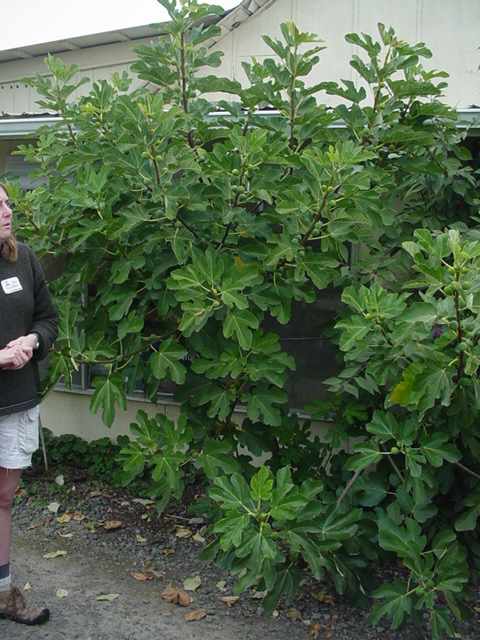
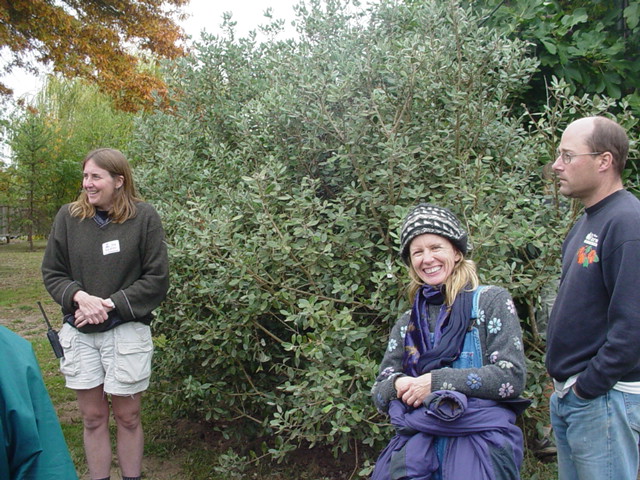
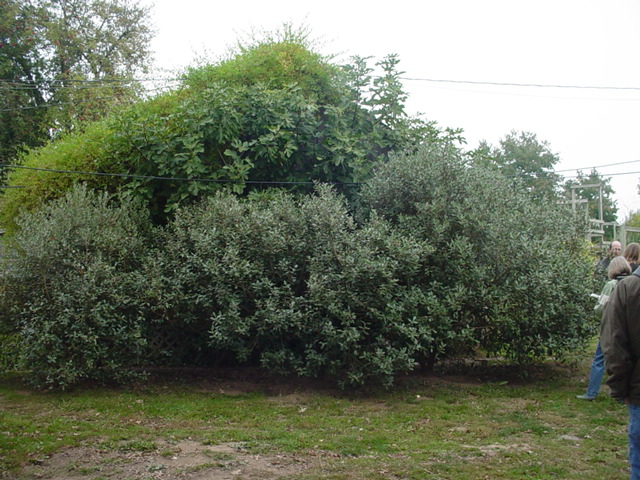
Figs crop twice, once in the summer and again in the fall. Some varieties have their main, heaviest crop in the summer, and others in the fall. In this region, Desert King is a good variety for a heavy 1st crop. Latarulla is a good variety for a heavy 2nd crop. Figs are somewhat deer resistant, due to their latex. The fig on the left is Latarulla, on the right is Peter's Honey, 3-4 years after planting as a 1-2 year old cutting propagation. Of the figs OGW sells, Peter's Honey is the sweetest, but has the longest ripening time so needs a good warm spot outside of Portland in this region. (In Portland we're a warmer microclimate in general already.)


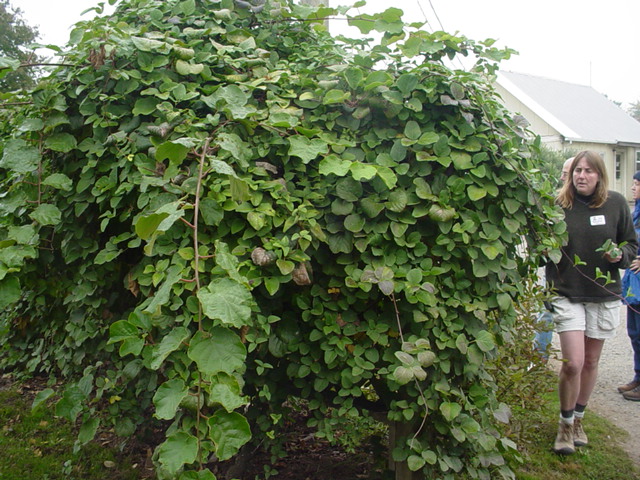
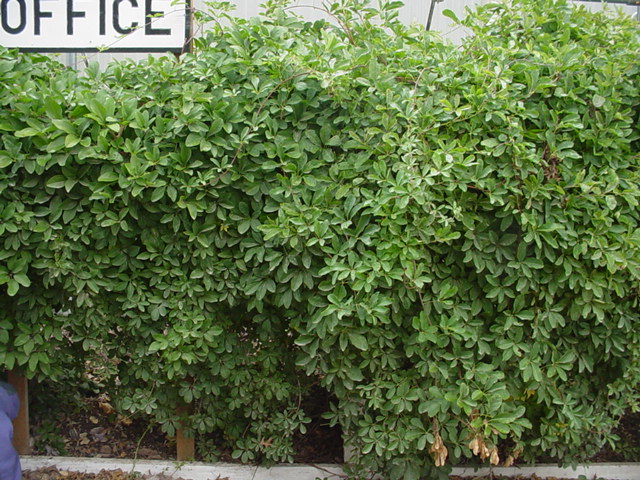
Akebias sold by OGW come in two species, the 3-leafed and the 5-leafed. Both produce seedpods which contain a white pulp around hard, inedible seeds. We were able to eat some pulp; the texture and taste are reminiscent of tapioca pudding. The pods are also edible; in Japan they're cooked as a vegetable. They can be stuffed and eaten like a pepper. It doesn't seem like a huge food crop, but if you want an ornamental vine it definitely has bonus food value. The 3-leaf pod is thicker and harder than the 5-leaf pod. Akebias are semi-evergreen, meaning they'll stay evergreen in a mild climate, but start losing some or all of their leaves if it gets too cold (I believe the temperature given was consistently in the low 20s? Or high teens?) They're low maintenance; at OGW they just whack the vines back as needed and the vines bloom just fine. The akebia picture on the left is the 3-leafed "Deep Purple", and the picture on the right is a 5-leafed variety.


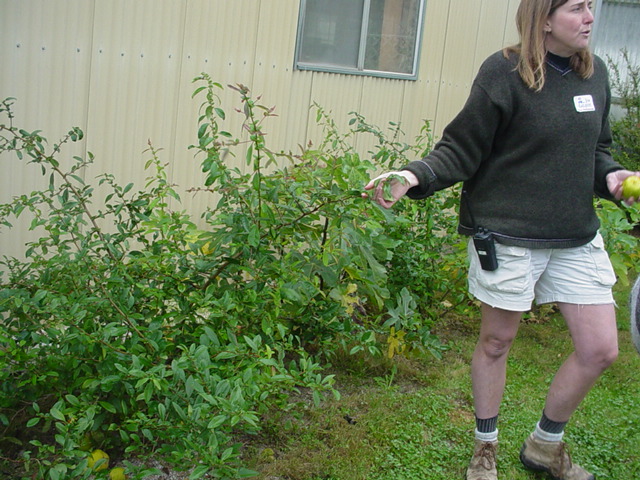
Flowering quince has citrus-like fruit on shrubs. I keep wondering whether the fruit has the same acidic properties and whether it can be used straight-up in recipes.


Aronia is good for adding to apple juice. On their own the juice is only "ok".

Beautyberry has unique purple berries which hang on the branches after the leaves drop. They berries are very bitter, but edible.

Empress tree is a fast grower! Considered a weed tree by many people.


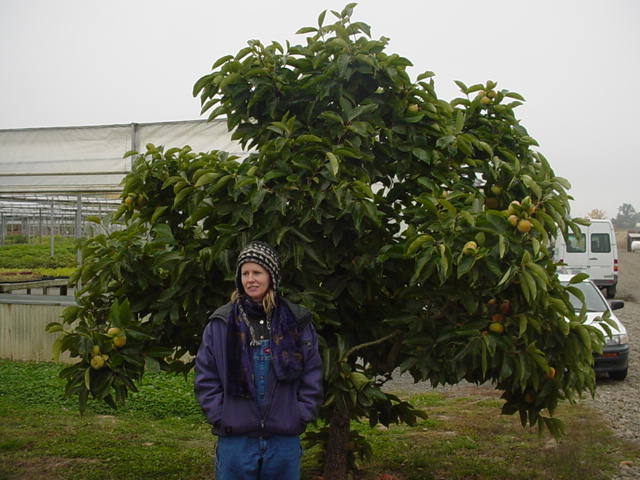
Persimmons - astringent types can be fast-ripened overnight in hot water at the right temperature. Astringent varieties are always sweeter than non-astringent. The persimmon on the left is an American persimmon, which are all large trees with relatively small, astringent fruit. On the right are two different Asian persimmons, one so loaded with fruit its branches are badly in need of extra support! The Saijo persimmon is ideal for drying (and from other conversations I've had with OGW, seems to be the only proven astringent variety for this area.) Fuyu is a dry crisp [did I get that right?] non-astringent variety.


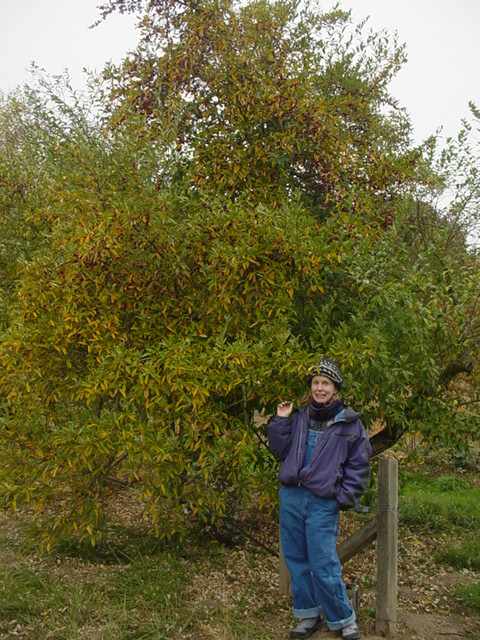
Jujubes are late to leaf out, as late as June. The variety "Coco", when dead ripe, has a coconut flavor. (I tried this variety inside at their sample table and thought it tasted, like all jujubes I've tried, like a cardboard apple--and not even a coconuty cardboard apple. :/ ) They are attractive shrubs, as seen in the picture on the left.


Asian pears are super productive. Thinning out the numerous fruits allows those that remain to become larger.

Autumn Olives are large shrubs of the Elaeagnus genus, meaning they fix nitrogen and produce tasty red berries. We munched on a lot of them from different plants. All were good, but the "Ruby" variety was slightly sweeter and tastier. "Garnet" appears to be a seedling selected by OGW to ensure pollination for "Ruby" when they sell it, since they're unsure of whether Autumn Olives are self fertile.


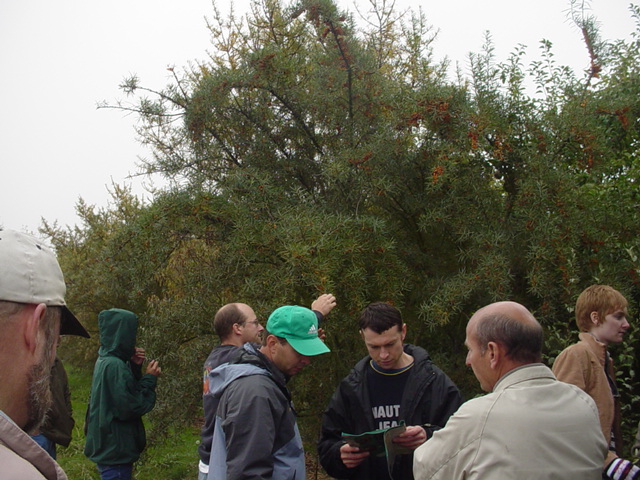
Seaberries are highly prized in Russia, and used for commercial juice in Europe (especially or only Germany?). They must be sweetened to become palatable, though last year there was someone on the tour who said he ate them raw from his bush. For easy harvesting in Germany(?), they cut off entire branches and freeze them, which then makes it easy to mechanically knock off the berries. With this setup plants have to be on a two year rotation, since the cut branches can't crop the following year.


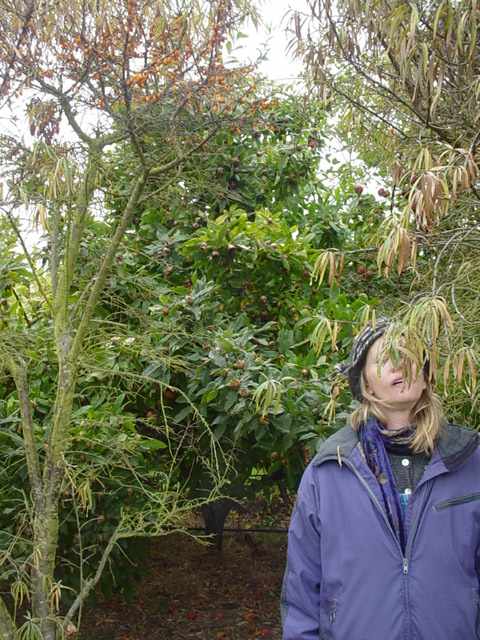
The Medlar in the background is about 12' tall. Medlars are tip-bearers. The "Nottingham" variety is annoying because the fruit tends to fall off before its ripe. Some varieties, especially those with larger fruit, are prone to the fruit splitting, but apparently this doesn't cause any problems besides aesthetic. There was a vague report of dipping medlars in salt water and hanging upside down to do something...preserve them? Medlars have to "blet", aka "rot", to soften up before eating. This can happen on the tree, or you can pick them and blet them indoors.


Pineapple guavas are slow growers, but grow faster with supplementary water in the summer. This hedge of 4 was planted in the 01990s, froze and died to the ground, and then grew back. One guy mentioned that wind in the winter knocked off lots of his leaves. In a hard freeze, new leaves fall off. I guess that would make pineapple guavas semi-evergreen, and not suitable for winter windbreaks.

Fruit Tastings

Last year and this year, Theressa and I attended fruit tastings at One Green World and at the Home Orchard Society's "All About Fruit Show". From those, I have scribbled notes on various scraps of easily mislaid papers with our reactions to the different varieties and fruits. It seems useful to compile those notes here, both for our benefit and for anyone else who comes along. I suspect other notes will turn up after I post this, which I'll just integrate into this post...so don't be surprised if new varieties magically appear later.

Note that these reactions are by no means definitive--fruit quality can vary widely depending on whether it was harvested at the optimum time, the quality of the soil in which the plant is growing, whatever whims our non-professional taste-testing palates impose, and so on. That said, here's what we've got:

Kiwis

Home Orchard Society All About Fruit Show, fall 02005

  • Dumbarton Oaks - yum! slight bitterness
  • Arguta purpurea (Hardy kiwi?, Red) - very good
  • 74-49 - As good as Dumbarton Oaks without bitterness
  • Kuenta 72.001 - very good
  • Michigan State - so so
  • Cordifolia - very good
  • Anna - very good
  • Hardy Red - different taste, very good. Theressa wonders whether the fact that it's red gives it extra nutritional value?

One Green World, fall 02006

  • Hardy Red - bitter says Norris, Theressa likes
  • Rossana, Dumbarton Oaks, 4-96, L-167, Michigan State, Anna - all good
  • #54 especially good
  • Fully ripe Annas straight off the vine in the OGW orchard are especially enjoyable

Apples

Theressa likes crisp, tart apples. Norris likes a fair amount of sweetness, though sweet-tart is fine.

Home Orchard Society All About Fruit Show, fall 02005

  • Ashmead's Kernel - Theressa and Norris like. Maybe a hint tarter than Norris prefers
  • Black Gilliflower - neat color, good taste
  • Braeburn - crips, some tart, Theressa likes
  • Calville Blanc - meets both taste bud needs [not sure in retrospect what this means--maybe Theressa's requirement for tart and crisp. Or maybe it appealed to both N & T]. Kinda like the apple tree at Theressa's house at Rhine.
  • Earligold - mushy, nothing special
  • Fiesta - good, crisp
  • Gala - soft, low on flavor
  • Honeycrisp - watery
  • Idared - eah [not impressed]
  • Liberty - pretty good
  • Pink Lady - Excellent [we've also enjoyed Pink Lady's from the supermarket]
  • Red Boskoop - T likes the tart, N would like a tad less
  • Spartan - crisp, tasty
  • Sonata - crisp, very sweet, but enough tart for T which N doesn't notice
  • Spitzenburg - good
  • Swiss Gourmet - soft
  • Zeek's Longkeper - T likes, N thinks "OK", bland

One Green World, fall 02006

  • Callaway crabapple - N likes OK, T finds sour
  • Golden Sentinel - N likes OK, T not so impressed
  • Northpole - not impressed
  • Scarlet Sentinel - N likes OK, T likes OK
  • Spartan - OK

Asian Pear

Home Orchard Society All About Fruit Show, fall 02005

  • Chojuro - good!
  • Czui - not much flavor, softer, more tartness
  • Daisui Li - T likes OK, N finds watery and bland
  • Imamuraaki - a littel tart, almost apple. T likes.
  • Lao Suan Li - very good!
  • Large Korean - grows well, good for drying. So-so on the taste test.
  • Komenashi - dryish, mealy, weird crunchy bits
  • Kosui - pretty good. T likes.
  • Niitaka - butterscotchish, crisp, some strange tastes
  • Raja - OK, funny taste that comes out [I think this means an aftertaste]
  • Seuri - interesting pineapple? taste, crisp, enough flavor but not lots
  • Seuri li - a little more flavor than Seuri, quite good. T likes
  • Shinko - watery, crisp, no flavor
  • Shin Li - More flavorful, not blown away
  • Ya Li - even waterier

One Green World, fall 02006

  • Daisui Li - N likes well
  • Raja - yum!
  • Ya Li - N likes OK

European Pears

Theressa isn't a big fan of pears in general, though she hasn't had a lot of exposure to different varieties.

Home Orchard Society All About Fruit Show, fall 02005

  • Belle de Beugny - little taste
  • Cascade - T says like Wasser/Warren, general standard pear taste. N likes, but like Wasser better.
  • Conference - Norris yum (had this at HOS '06)
  • Elliot - good
  • Leona - kinda an apple. Crisper, less sweet.
  • Lezinova - eah
  • Mellina - OK
  • Princess - yum
  • Turnbull - bleh
  • Wasser (Warren?) - yum!

One Green World, fall 02006

  • Shipova - yum! says N, unique taste. T likes OK, too much pear taste for her to be excited.

Figs

One Green World, fall 02006

  • Lattarulla - very sweet, N and T like
  • Peter's Honey - sweet, N and T like
  • Vern's Brown Turkey - not very sweet, neither N nor T impressed

Grapes

One Green World, fall 02006

  • Blue Muscat - similar to Glenora, stronger flavor.
  • Canadice - a little tart-sweet, good.
  • Glenora - good
  • Heavenly Blue - yech
  • Marquis - good (instinguishable from Reliance)
  • Reliance - good (indistinguishable from Marquis)

Home Orchard Society All About Fruit Show, fall 02006

  • Challenge - OK, not exciting
  • Marquis - yum!
  • Mars - OK
  • Vanessa - OK

Pawpaws

Home Orchard Society All About Fruit Show, fall 02005

  • Wells - interesting flavor with aftertaste, not so sweet [not convinced that this was fully ripe]

One Green World, fall 02006

  • Unnamed Pawpaw in official tasting - N likes, T doesn't like--got a bitter taste from it.
  • Found fully ripe Pawpaws on the trees in the OGW orchard, which were all delicious to N and T.

Miscellaneous

Aronia

Raw - meh. Sweetened juice tastes good.

Chinese Haw

Both N and T yuck, cardboard apple but bitter! (OGW '06)

Chinese Dogwood (Cornus kousa)

  • Big Apple - tasty goop inside, 2 seeds. Skins yucky. (HOS '05)
  • E14 - sweeter goop than Big Apple, but more seeds. Skin not good. (HOS '05)
  • fresh from OGW orchard trees and local Portland trees - N and T enjoy a lot.

Cornelian Cherry

  • unnamed variety - OK, big seed, not much flesh (HOS '05)
  • unknown yellow variety - OK, nothing special (local Portland tree)
  • unknown red varieties, probably somewhat overripe - range from OK to somewhat too tart for N's taste though T likes OK (OGW orchard '06)

Jujube

N and T have found all the Jujubes they've tried, whether at fruit tastings or from OGW orchard trees, to taste like cardboard apples. Not impressed

Persimmons

  • Garretson - yum! small clusters (HOS '05)
  • We've scavenged some fallen persimmons from local Portland trees, and from a OGW orchard tree in '05 and '06, all generally in the fully ripe, mushy stage--all have been really tasty
  • We had some supermarket nonastringent types last year, and some supermarket astringent types. We both liked both types. Astringent seem to be sweeter, but the ability to eat nonastringent like crispy apples is nice.
  • Norris has eaten fallen American persimmon fruit at the Home Orchard Society demo orchard--fully ripe mushy, yum! Lots of waste though, since trees are way high and you have to scavenge relatively undamaged fruit from what's fallen to the ground

Seaberry

Seaberry juice, sweetened, tastes good. Raw seaberry - yuck.

Wolfberry

Dried wolfberries not terribly exciting but knowing how healthy they are, tasty enough to eat happily. Wolfberry fresh off the plant - good! (OGW '06, new named variety they're carrying)

Tuesday, November 07, 2006

Book review: West Coast Food Forestry by Rain Tenaqiya

West Coast Food Forestry

I received and read West Coast Food Forestry: A Permaculture Guide by Rain Tenaqiya a few weeks ago. I think it's a very useful addition for this region to the other resources available. Much of the bioregional analysis I've figured out in the last couple of years, but some of it was new, and it would have been a great headstart for me when I was just getting started. Surprisingly, the CD introduced me to several new trees, shrubs, and vines I hadn't heard of before, despite obsessive perusal of catalogs and other permaculture resources! The section on perennial vegetables was especially useful, summarizing a lot of the species already on my to-try-out list and introducing me to many many more. There were also a few surprises in terms of uses and edibility of some of the plants I already new about.

There are also some handy lists of plants that meet different conditions--"Fertilizer Unnecessary: Tall Trees", "Makes Lots of Organic Matter: Herbs", "Casts Light Shade: Short Trees", etc. And there's a sweet little chart of harvest times for Fruits, Nuts, and Berries to help plan your food forest for staggered harvests.

The book gives virtual tours of many west coast permaculture sites. The descriptions are inspiring, giving some ideas on combinations of plants being tried out elsewhere. Unfortunately, the pictures of the sites have been compressed enough for the ebook that it's difficult to make out what's what...I received permission from Rain to post higher quality images as a Picasa album.

All in all, I found this to be a good read and I've referred back to its various lists and plant bios as I designed our current food forest.

There's another review of the CD at:
HopeDance.

discountpermaculture.com

Last year, I organized a wholesale order of edible plants from One Green World, a local nursery. I'm doing it again this year, and since I also have a habit of ordering multiple copies of interesting permaculture-related books to share at a discount with others, I put together a website to handle the plant order and list the books I have available:

http://discountpermaculture.com

The plant order is open to anyone who can pick up their order from our house in NE Portland in January or February, and the books are available either for pickup or for mail orders. Feel free to share the URL with anyone who may be interested in plants or books at discount prices!

Fall plantings

I've been doing one of my favorite things this past week--planting forest garden plants! It takes a lot of mapping, researching, designing, planning, redesigning, reresearching, and replanning (part of that whole prolonged & thoughtful observation rather than prolonged & thoughtless action thing) before I finally get to the point of actually putting a shovel into the ground. So it's always rewarding to pat down the soil around a newly homed plant.

There are two sites I've been planting--our own yard of course, plus the already partially planted food forest at Theressa's dad's place (Jay's). At Jay's, we planted 18 trees last spring, but very little of the other layers (10 shrubs, and no ground or vine layers.) We simply didn't have time last spring to finishing designing the tree understories, obtain plants, and get them into the ground before the end of the rainy season...and since we only make it over to Jay's about once a week, we figured it was better to grow his plants in pots at our house for the summer instead of putting them into the ground late and not being able to baby them to ensure they thrive. Now that the rainy season has begun (and oh boy but has it begun!), I planted another 13 shrubs and 3 echinaceas as understories, which makes the whole area look much more like an actual multi-storied food forest instead of trees stuck in a sea of wood chips. It's very exciting, and I'm looking forward to small (but tasty and real!) harvests next year of gooseberries, currants, barberries, chilean guavas, and maybe even blueberries, plus perhaps some pears, cherries, plums, apples, and peaches (though I need to decide whether to allow the trees to set fruit next year, or remove their flowers and fruit to let them invest all their energy in growing for another year.)

I did most of the planning for Jay's last winter while still living at the Portland Permaculture Institute, designing understory patches for trees both at his place and at the Institute. I made some last-minute changes, primarily adding a few extra gooseberries and currants, but mostly implemented the designs as-is. It was really nice to be able to just pull out the old designs, find the appropriate plants in pots, do some minor measuring on the ground, and put in the plants.

Here at home, a lot more planning has been necessary over the last couple of months. The mapping was pretty easy--the lot is a simple 50' x 183' rectangle, with the house in the middle dividing the lot into two distinct design areas. There are a few tall trees (30-40') at the south end of the back yard: an evergreen on the neighbor's lot to the east, essentially at our southeast corner, a seedling cherry on our south boundary about 8' in from the east edge, and a black walnut on the neighbor's lot to the southwest. There are also many black locusts and one more seedling cherry along the east boundary of the lot in both the front and back yards. Other than those, the lot is a blank slate.

Since we have tremendously destructive miniature dinosaurs roaming the back yard, pecking at anything which moves or doesn't move, scratching anywhere there may be roots to destroy, and ignoring the paths we carefully lay out to instead trample across any vegetation they can find, we decided the back yard would be primarily trees and shrubs and large perennial herbs. I designed a layout with:

  • 4 main trees (2 plums, 1 cherry, one fig), with 15 understory shrubs (gooseberries, currants, serviceberry, chilean guava, blueberry, salal, honeyberry)
  • a 10-shrub thicket of medium sized shrubs approximately 6' x 6' (blueberries, honeyberry, serviceberries, wolfberry, pea shrub, chilean guava, goumi)
  • a continuous evergreen hedge along the entire east boundary to act as a windbreak for the cold winter winds. Evergreen huckleberries on 6' spacing under the black locusts (which are nitrogen fixers), and nitrogen fixing Silverberries (Elaeagnus sp.) on 6' spacing in non-locust areas, plus salal halfway between all the 6' spaced larger shrubs
  • one lone mulberry which is going to hate the spot we're giving it 4' out from the north wall of the neighbor's garage (but which, if it grows up tall, will one day hopefully get enough sun to fruit nicely). No understory for the mulberry, as this area is where we plan to keep the hen house, duck and rabbit housing if we ever raise them, wood for burning, etc
  • an experiment with semi-espaliered Autumn Olives all along the west fence with various vines trained up them--pruning them flat against the fenceline to be living trellises and more effective chicken barriers than our current 3.5' fence, and giving them 1' of space towards the yard with a 2' path beyond that. This attempt to corral the autumn olives in such a small space may prove to be a maintenance headache and/or a mess, but if it works it'll provide nitrogen-fixing, tasty berries for humans and birds, firewood coppicing, and trellis space.
  • a row of larger shrubs/small trees (including 2 yellowhorns, 2 Cornelian Cherries, and a medlar) a few feet out from the west boundary, plus another goumi and pea shrub
  • A row of buried bathtubs about 6' out from the future house boundary, to allow us to experiment with aquatic plants and to provide extra winter sunlight into the house

The front yard, not cursed with hunt-and-peck feathered killing machines, will feature a large open area of about 1200 square feet, used for annual vegetables, herbs, nursery plants, and some smaller shrubs. In addition, we'll have:

  • 3 Pawpaws and 2 Chinese Dogwoods (Cornus kousa) in the morning-shaded area just off our east boundary of tall locusts and cherry.
  • 2 asian persimmons and 2 olives in full sun
  • east boundary evergreen hedge with the same pattern as the backyard, except for one full sun area where we'll plant two Darwinian barberries (Berberis darwinii). The front yard currently has a laurel hedge all along the east boundary, so we hope to rip out sections of the laurel hedge to plant the replacement plants, with ongoing pruning and knocking-out of the rest of the laurel hedge as the new plants grow
  • 2 large nut trees on the north boundary of the lot, taking advantage of the fact that shading out the street doesn't matter. Probably 1 english walnut and 1 chestnut, if we can convince a neighbor to plant a chestnut for pollination; otherwise 2 chestnuts.
  • 2 hazels as nut tree understories, plus a few sun-loving shrubs on the south edges of the nut tree canopies.
  • A material zone 10' wide x 14' deep to act as an unloading zone, receive future wood chip drop-offs, and possibly serve as a parking spot for soil-crushing cars
  • bike rack, probably set in concrete and with a roof covering, for visitors to secure their bikes

There is essentially no area on the east side of the house for planting. There is an area approximately 11' wide on the west side. A black walnut (or english walnut if we wind up planting two chestnuts in the front yard) will be planted approximately even with the south edge of the house, 8' from the house, for future summer shade (and, of course, nuts). North of that, a line of Russian Olives 8' out from the house will be trained to form an archway to the house, serving as a sun-screen for blasting summer sun, support for trellising vines, possible coppiced firewood, nitrogen fixation, and possibly future sheltered nursery space once there's sufficient shade.

We plan to run some hardy kiwi vines up some of the existing black locusts and maybe the seedling cherry trees. Eventually we'll use kiwis and grapes as summer sun-screens for the south side of the house, though first we'll have to tear off and rebuild the south addition. We may also experiment with either non-living trellises over the main 4' path in strategic spots, or living trellis (autumn olive?) trained to form archways over paths, with grapes or kiwis growing on those as well.

I'm following one of Dave Jacke's forest garden patterns for trees in which a 2' path circles the expected mature canopy dripline, with 5 1.5' paths evenly spaced from the perimeter of the tree to its center, like wheel spokes. This creates full access to the tree and understory for maintenance and harvest, while leaving as much of the rootzone area as possible untrampled and uncompacted. The 2' path around the outside of the tree allows extra sunlight to penetrate into the understory, making it more productive, and also allows a margin of error in case trees get larger than expected.


Once we had the design on paper and Theressa gave her first-pass thumbs-up, I measured things out on the ground and "planted" bamboo poles of the approximate mature height of the given tree or shrub. I used metal sign-stakes to mark off the perimeters of the trees and delineate the paths (one main 4' path through each yard, plus 2' paths to access almost every tree and shrub from all sides.) The backyard picture on the top is from the roof looking south, with the shrub thicket at the bottom of the photo, taller trees in the middle of the yard, and the mulberry sticking up over the orange garage at the back. You can sort of make out in the pictures the stakes for the tree perimeters, and the main 4' path on the right side of the picture. The front yard photo on the bottom, looking north from the roof, is less dramatic. The bottom part of the photo with the existing garden beds and extending further into the middle of the yard will be open space, with a few bamboo stakes towards the street indicating the trees and shrubs to be planted there. For the trees to be planted in the driveway once it's ripped out, I used pots as the plant markers, which aren't nearly as much fun as 15' tall bamboo stakes.

I've started planting the back yard with the plants we already have in our nursery. All in all, I'll be able to plant about two dozen trees and shrubs and several vines now, with more to follow once we receive plant orders later this winter. A few plants will have to wait until house renovations are completed, as they're too close to the expected construction zone.

I hope to get the yard designs for both our house and Jay's place scanned and posted, but the last time I tried the scanner it wasn't working. :/ I'll get them up eventually, but don't hold your breath! I welcome questions about the designs, plants, implementation, etc...

Monday, November 06, 2006

Oregon Indigenous Population Densities

I just sent an email to some friends and thought this part was worth posting here too...I'm reading L. S. Cressman's The Sandal and the Cave: The Indians of Oregon, published back in 01962, summarizing what's known (or what was known back then) about the indigenous populations of Oregon. I'm not too far into the book, but I got a partial mind-blow regarding indigenous population densities which seems worth posting here.

Obviously any number for pre-European native population involves a lot of speculation--guesstimates for the population of the Americas as a whole range from 10 million to 200 million. (See Charles Mann's 1491) But even with a huge margin of error, the Oregon numbers are astounding. The numbers in the book are based on 1939 figures from A. L. Kroeber, who seems to have been a respected anthropologist. Listed for each group is the number of people per square mile, then the number of square miles per person (the numbers are inverses of each other.)


Grouppeople/mi²mi²/person
Pacific Coast.651.54
Chinook on Columbia River from The Dalles to the sea3.86.26
Coos around Coos Bay & south to the Coquille2.6.38
Columbia River east of the Dalles.128.33
Klamath (the author says densities were likely higher than these numbers, since much of the claimed land was used only lightly).137.69
Northern Great Basin.0616.67


So the densest population of Oregonians pre fossil-fuels were the Chinook, living in a fully functioning ecological community that wasn't half-asphalt, with abundant salmon runs and game to hunt. And they had one person per quarter of a square mile, or 160 acres. That means I'd have 9 city blocks by 9 city blocks of land supporting me. Damn but are we in overshoot.

Not that this is news...but there's a difference between knowing that we have 600+ million extra people on the continent vs the close-to-home comparison of 9 city blocks square just for me or 9 city blocks square for 600 households.

Similarly, if you assume a population density of 1 person per 3 square miles, the 1 million acres of Mt. Hood National Forest could support a whopping 555 people. Boy, looking at the facts sure puts a damper on hopes for a soft landing.

Granted, we still have to fossil fuels we can burn to support our overshoot for a while yet, and there's been a tremendous mingling of plants and techniques from all over the world which could allow for the most productive horticultural (or permacultural) communities humans have ever managed. But weighed against those bonuses in the carrying capacity equation are the impacts of climate chaos, toxification of the environment, degradation and paving over of soil, loss of even the most rudimentary naturalist skills, and the ongoing mass extinction. All in all, we know that population needs to decrease, and numbers like these give us a good indication of the general order of magnitude we're looking at, at least in the long-run.

Sunday, October 22, 2006

Fall cover cropping

I cover cropped half our front yard last Wednesday (1500 square feet) with 1.5 lbs of wheat, 3/8 lb of crimson clover, 3/8 lb of white dutch clover, and 4.5 lbs of fava beans. To determine how much to use, I found different recommendations of how much seed to sow from different catalogs, then applied 1/4 the lowest recommendation of crimson clover, 1/4 of white dutch clover, and the lowest recommendation for wheat and fava beans. I figured that a somewhat higher density of seed would be appropriate than just dividing everything by 4, since the part I sowed is covered in wood chips laid down about 7 months ago and doesn't give the best conditions for establishment, plus the different species will utilize somewhat different niches in the soil and above ground. I used wheat because we have a lot of it already for food but we're weaning ourselves from it, favas because they're a classic cover crop and we hope to eat them in spring, white dutch clover because it's a perennial which will stick around as a ground cover (and even expand its coverage) anywhere we don't replace it with other stuff, and crimson clover because Theressa thinks it's pretty, plus it's cheaper than the white dutch and can fill in space until it dies off next year, by which time the white clover will be ready to fill out.

I followed pretty much the same practice I used when I cover cropped in early summer, presprouting everything in advance. When sowing, I began by trying to carefully apply seeds from the wheat bucket to an area of the yard, then carefully pick seeds from the clover bucket (with both kinds of clover mixed together), then from the fava bean bucket. But I got tired of that very quickly and decided it was a lot easier and a whole lot more fun to just grab handfuls of seeds and fling them across the yard in a vaguely targeted yet largely random manner. I think the yard got fine coverage.

Once the seeds were all flung, I covered half the yard in another 1" of wood chips. I left half the seeds exposed to the air because we were in a cloudy, rainy stretch. However, by Friday the sun had come out enough that I decided it best to cover most of the exposed seeds with 1" of chips. I still left a few areas uncovered to see how the different patches do.

As of today, in the patches not covered in chips, there are some signs of the first green leaves unfolding if you look closely enough at the chips, and lots of seeds sending out their radicles (the first white shoot a germinating seed sends out) trying to find a path through the chips downward to anchor its root. I haven't seen anything breaking through the 1" chip layer yet.

RIP Cleo, 1987-2006


Yesterday we had to put down Theressa's cat Cleo of nineteen and a half years. She's been a miracle kitty, reversing a diagnosis of feline leukemia when she was a year old, and bouncing back from the vet's prognosis of death within a day or two two years ago after a severe E coli infection, mixed with a slightly enlarged heart, one functioning kidney, and thyroid problems. Nonetheless, after some tough times for Theressa two years ago, Cleo decided to stick around and help Theressa through the hard times, being gifted in turn with wonderful pampering fit for a queen. Cleo remained happy and healthy even as she slowed down over the last year, but over just the last week, her body really started to crash. By two days ago she could barely walk, stumbling along in the saddest manner, no longer able to purr normally, too tired to move much at all. :(

Cleo's long-time vet came to our house yesterday afternoon to give her a gentle passing from her body into painless freedom. We buried Cleo today, at one end of one of our vegetable beds, in a sheltered sunny spot in the food forest plan. We'll put something on her grave to mark her rest, whether a bird bath, a special plant, or something else...to be determined.

Rest In Peace, princess.

Saturday, September 02, 2006

The Birds and the Bees

Theressa and I have been living at the new house she bought since the end of March, so it's about time I gave an update on how things are going here! Theressa bought .2 acres with a small 800-odd square foot shack plus garage/carport/shed. The lot is 50' x 175', with the house set back 80' or so from the street, leaving a 65' long back yard. There's almost no tree cover right now, except for one pine and one cherry in the back yard on the south boundary, a row of black locusts on the east boundary in the back yard, and a cherry and a few more locusts on the east boundary in the front yard. It's nice to have a near blank-slate for designing in full sun.

Soil

The soil is interesting--incredible drainage, but very little top soil and full of rocks. Apparently this area used to be a river bed. My thought is that there's good nutrients available because of the presence of rocks constantly being weatherized, but that we need heavy additions of organic matter to improve soil structure and hold on to some of the water, and we probably need dynamic accumulator plants to tap into the nutrients that have washed downwards with the rain and bring them back to the surface. So, we've had dozens of loads of wood chips dumped in the driveway and have sheet mulched almost the entire yard to build soil organic matter, add nitrogen via coffee grounds and dumpstered bread (our soil test showed 1 part per million nitrogen, ouch!) and improve soil life (our earthworm population is really really weak). The driveway is currently used to store heaps of wood chips continuing to break down, plus our firewood pile.

I tried an experiment a few months after the first layer of sheet mulch. I presprouted three or four jars worth of beans and many more seeds of various Amaranthus sp. (pigweeds) and Chenopodium sp. (lambs quarters and relatives) and sowed them directly into the wood chip sheet mulch. I sowed the beans on top of the wood chips and then covered with about an inch of fresh wood chips. I then sowed the smaller seeds and raked them into the mix. We used the sprinkler for the next few days to keep things moist as the seeds established. I had no idea whether or not it would work, between the hot June sowing, ravaging chickens in the back yard, and general uncertainty of how well the seeds would take to having no actual soil, just wood chips. It turned out fairly well--many bean plants did come up and several developed into very healthy plants (those in the back yard have now been largely devoured by the chickens). The smaller seeds didn't seem to come up at all--I think they should have been sown with the beans and then had the 1" of chips on top of it all. As it was, I think sowing the smaller seeds at the surface and raking them in was inadequate to protect them from drying out in the sun.

Annual beds

Two or three days after she took possession, we had a load of 6 cubic feet of mixed soil plus 3 cubic feet of potting soil dumped in the double-wide landing-strip driveway (the previous owner had an RV), and within a day or two had four 20' x 4' raised beds laid out and seeds planted. This is our third year of trying to grow annual vegetables, and the first year things have really clicked for us. The beds have kind of petered out now, but for a while we were having large salads every day, and we got lots of beets and carrots and rutabagas from the first round of planting. Very exciting! We've found that the heat of summer on our fully sun-baked garden beds has made it difficult to grow a second round of veggies, especially as we have a lot of projects going on and can't devote all the necessary time to the annuals. Hopefully the fall growing will be a little easier as the heat backs off and rain starts in.

Sharing Garden

Taking a cue from a practice Pam & Joe from the Permaculture Institute had used at their old house, we created a sharing garden right next to the street, with raspberries in a curve enclosing salad plants, strawberries, and four large barrels planted with cherry tomatoes and a nectarine. We encourage passersby to harvest from the area, sharing the wealth and helping people realize where food actually comes from. At first we had a hard time convincing anyone to take any food, but now there seems to be some regular picking of delicacies! Unfortunately, the summer heat has taken its toll on the front area, which is far enough away that it gets even less maintenance including water than do the annual beds next to the house. Permaculture zones in action!

Nursery

We have a nursery going of plants we bought wholesale last year, plants we've started from seed, and other plants we've accumulated here and there. Although we have planted out lots of annuals already (especially squash and sunflowers) and a few perennials (especially jerusalem artichokes), we're waiting to do any "real", permanent planting until this fall. By then we will hopefully have a fairly good feel for wind and water flow, sun patterns, traffic dynamics, interaction with the house, etc. Probably the planting will be in two stages--one in fall with the plants we already have, and a second in late winter or early spring when new plant orders come in. Meanwhile it's a struggle to keep the nursery watered well with so little shade, but we're doing pretty well! There are a lot of seeds we have which I'd hoped to start this year but didn't get to...hopefully we can organize well enough to do a round of seed starting in the fall for overwintering and germination in the spring.

The Birds

We have hens for eggs! We started Helen from a chick last year; she lived at the Permaculture Institute for a few months after we moved out, giving us time to start new chicks and build a hen house. The chickens have the full run of the back yard and are proving to be wonderfully destructive little beasts. It's fun watching them scratch the hell out of plants and wonder exactly what our permanent planting will look like. One of our hens wandered out of the back yard and found a rat trap which gave her a concussion and had us worried about her for several days. :( She seems to be OK now, though after a few name trials we seem to have settled on "Dizzy"--we're guessing she'll never be quite like the rest of the chickens. :/ At this point Helen has been laying regularly and Sexy (our black sexlink) just joined her last week with little teeny tiny cute baby eggs! Here you can see Sexy in action, plundering a sunflower head twice as tall as she! Chickens have wings but can't fly very well, so she's jumping, not flying!


The Bees

We also have bee hives! We bought two "packages" of bees, which are small cages with a queen and 10,000 worker bees buzzing like crazy. We set one hive up on our roof and the second hive up at Theressa's dad's place, where we've been sheet mulching and planting a food forest since last fall. This past June Theressa caught a swarm of bees from a neighbor's tree way high up, and we set that swarm up on our roof as well. The purchased colonies seem to be doing really well; we've actually added "supers" which are boxes in which bees place their "surplus" honey, the stuff we get to harvest! Normally you don't expect a harvest the first year, so it's exciting to potentially be harvesting already. The swarmed colony, perhaps because it was set up later in the year, seems healthy enough but lacks the honey reserves and full strength of the other two colonies. We might steal some honey from our strong colonies to make sure our swarmed batch can make it through the winter and have a strong start next year.

It seems that I may be allergic to bees--I had amusingly chipmunk-like swell-up the first time I got stung in the cheek, and a similar reaction the second time I was stung on my foot. Stings since then haven't been nearly a problematic, so I'm not too worried about it, but for now Theressa is the primary beekeeper, with me acting as a cowardly back-seat driver shouting inane instructions and taking pictures from a safe distance.

The Fungi

We ordered 2000 plugs inoculated with mushroom spawn--1000 each of Shitake and Oyster mushrooms--and spent a tediously long time drilling holes in big chunks of wood we scavenged here and there, hammering in the plugs, and sealing with beeswax. We have them stacked in a big criss-cross pile on the north side of the house where they can be shaded, and we're keeping them watered. Next year the spawn should have colonized the logs well enough to start producing mushrooms!

That about covers the summary of yard projects. We've also been busy canning and preserving gleaned food (blackberries, apples, figs so far), and there's a lot of work to be done on the house itself. I'll write more about house projects later.